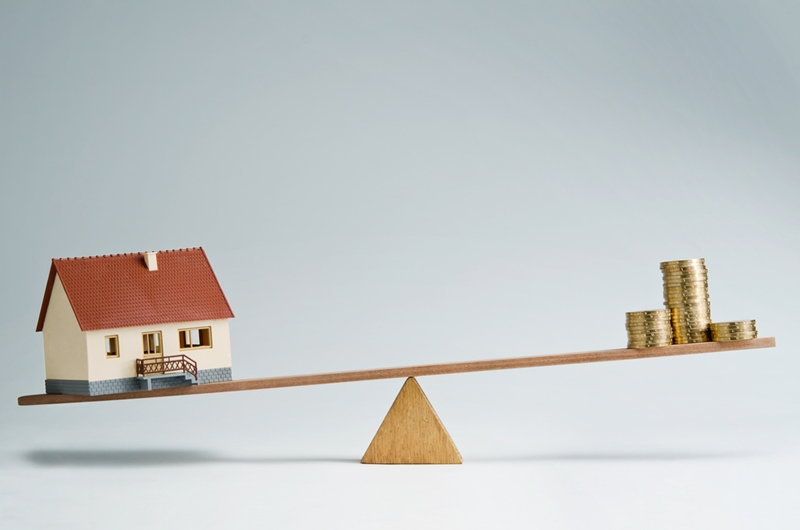

Investing in your twenties: It’s still possible to buy property before 25

With all of the media attention focusing on Australia's out of control property prices it's understandable that young first home buyers may feel priced out of the market. However, we happen to know that with the right planning, strategy and advice it's possible to buy property in Australia at 25. Here's how.

Plan young

Buying a home is like writing an essay – you're not going to get far if you don't have a plan.

A Member's Bank study revealed that the savings habits of Australians leave something to be desired in this regard – 59 per cent did not habitually set a budget and 41 per cent did not regularly stick to it.

Save young, plan young, buy young.Save young, plan young, buy young.

Moneysmart data also reveals that 75 per cent of confident savers have a detailed plan. Be a part of this group and break your savings goals down into weekly, monthly and yearly instalments. That way you wont be aiming at something far off on the horizon, but for something more imminent and motivating.

Export your online bank statements into a spreadsheet, or use a savings planning app to do so. That way you can understand what you overspend on, set limits and stick to them to achieve your goals of investing in your twenties

Save young

The same Moneysmart report shows that 78 per cent of confident savers know how much money is needed to reach their goals. Do as much research as possible on how much your home will cost, and how much it is likely to cost in the future – use resources like CoreLogic RP Data, Residex suburb reports and even advice from a buyers' agent.

78 per cent of confident savers know how much money is needed.

Let's say for example you're looking to buy a one bedroom apartment in Melbourne for $400,000. Most data shows prices going up – but forecasts such as QBE's Housing Outlook has Melbourne unit prices decreasing by 9 per cent by 2019.

In this instance it would be prudent to save 20 per cent of $400,000 so that you have a buffer if prices forecasts weren't correct. If you're earning the average income of all workers according to the Australian Bureau of Statistics ($60,320), you save 20 per cent of your income and apply for the first homeowners grant you'll be close to your deposit goal after just over 5 years. Save with a partner and you could be in a house within 3 years!

Alternatively talk to a mortgage broker about securing a loan with a low deposit and lender's mortgage insurance and you could be buying property even younger.

Buy young

Apply for the first homeowners grant early. Depending on where you live, it could shave as much as $10,000 to $20,000 off your deposit. Next, get help. Do your research and find an area and type of property that you want to buy then consider enlisting a buyers' agent to help you find a property that fits your needs.

You could be enjoying life in your first home faster than you might think.You could be enjoying life in your first home faster than you might think.

Atthis stage it's time to get your finances in order. A recent First Home Buyers Australia survey found that 38 per cent of first home buyers believed mortgage brokers were the most helpful service when purchasing property. We at Mortgageport know that we provide an incredibly useful service to you, finding you the most suitable loan products and a better deal. We can help make investing in your twenties as easy as possible.

Get in touch today for expert advice on financing your first home – it's never too early. 

A look at the costs of building your first home

Why buy your first home when you can build it? The Australian Bureau of Statistics (ABS) shows that In August 2016 alone 5,641 new construction mortgages were opened, so Australia clearly loves to get creative with its new homes. You'll have total control over the final shape of your home, gain the ability to add value through smart design and a slow start to paying off your loan with a construction mortgage.

But on the flipside you'll be totally responsible for your property's construction and mistakes could be costly. We've taken a closer look at building your first home to bring you a basic cost breakdown of the process. 

Building your own home means that you can customise it however you'd like.Building your own home means that you can customise it however you'd like.

What will building cost me overall?

The Australian Architecture Association guide to preparing a budget estimated the total costs of building a home:

  • $900 to $1500 / sqm for a Project home.
  • $2500 to $4000 / sqm Architect designed homes and renovations.
  • The most recent data from the Australian Bureau of Statistics puts the average total cost of building a new home at almost $250,000.

If your home needs extra design or building work due to unexpected issues it will most likely be charged at the upper end of the rate scale so your projects costs could quickly balloon. A construction mortgage from Mortgageport can make managing and monitoring these unexpected costs easier than with a regular mortgage.

What will each step of building cost me? 

Architects and design

AAA estimates the cost of home design at between 8 and 18 percent of the total construction cost. This amounts to between $136 and $306 per square metre. Using ABS data for the average floor area of a new home this will cost you between $34,000 and $75,000.

Materials

This cost will differ according to what kind of home you build. An Archicentre Cost Guide estimates that this will amount to roughly 46 per cent of total costs or $115,000.

Labour

A construction loan is very different from a normal first home loan.

This too can vary wildly according to the type of home you're building. Get quotes from several registered builders to make sure you're getting the best deal possible.

To give you an idea of the rough cost Archicentre estimates this will set you back you roughly 33 per cent of the total, or $82,500.

Fees, levies, permits and taxes

Archicentre states that fees, levies, permits and taxes will account for roughly 21 per cent of the total cost or $52,500. This varies from state to state and depending on your home. 

Being able to release funds as you need them with your construction mortgage will ensure that you are able to afford these charges as they arise. 

What exactly is a construction loan?

A construction loan is very different from a normal first home loan. The Australian Securities and Investments Commission's MoneySmart site explains that with this type of loan you withdraw money as you need it to pay tradespeople, until your home's completion when you revert back to a normal home loan.

There's a lot of work involved in building your first home.There's a lot of work involved in building your first home.


This is great for first time buyers, as you'll only pay interest on what you have borrowed – you'll only pay the full amount once the property is finished and you're living in it.

It's easy to get help

You wouldn't build your home without professional help would you? You shouldn't find a loan without the same level of assistance. A mortgage broker can act as the go between negotiating with your bank on your behalf if you have any issues.

The right broker may also be able to get you a better deal on your first home loan. Half a percentage less interest on a 30 year loan at ABS's median property price could save you well over $50,000 in interest payments over a 30 year term – that's nothing to scoff at. 

3 things to consider when taking out a mortgage with your partner

Buying your first property and getting your first home loan together is a massive step forward in your relationship. It may even be a bigger commitment than saying 'I do' and MoneySmart data reveals that it will certainly cost more. The average amount spent on a wedding is just over $36,000 – whereas the Australian Bureau of Statistics puts the average property price in Australia at over $620,000!

Considering the commitment and the massive cost involved you want to be absolutely sure you get it right the first time. We have a closer look at buying with a partner to make sure that your endeavours lead to a better financial future – instead of causing trouble in paradise.

Tenants in common or joint tenants?

When buying your land and property as joint tenants, it will mean that you both own it together. If one partner passes, the other assumes full ownership. You're both equally responsible for the property and any income or expenses. This is the ideal option for married buyers, but perhaps not for newer relationships as splitting the home can be difficult in the event of a breakup.

You've got to worry about sorting your first home loan before you even think about decorating!You've got to think about sorting your first home loan before you even consider decorating!

On the other hand buying as tenants in common will mean that you separately own an agreed upon percentage of the home with your partner. You will be responsible for expenses and income from the property, according to the percentage that you own. If you break up, selling your share is a relatively easy process.

Get on the same page and make it official

When you've discussed in depth what ownership structure is right for you, it's time to draw up a co-ownership agreement and make it official before you buy land or property. This is a legally binding document and should include answers to the following questions:

  • How will will the title to the property be owned?
  • Who is responsible for what costs?
  • Who will occupy or use the property?
  • When can one party require the sale of the property and what happens in the event of a sale?
  • What if one partner is unable to make their share of payments?

Going through this rigmarole with the one you love may seem pedantic, but it'll make the entire process easier in the long run. If you fail to plan you plan to fail!

The logistics of taking out a mortgage together

Draw up a co-ownership agreement and make it official before you buy land or property.

You and your partner will presumably need to take out your first home loan in order to buy property. If your partner can't or wont pay their share of the mortgage your lender usually has the power to come after you for the entire amount.

A recent financial literacy survey by MoneySmart showed that 52 per cent of women say they save first and spend second while 48 per cent of men say the same. While sex probably isn't a determinant in who's the better saver there's likely to be one spendthrift in the relationship and one who splashes cash – which could cause problems.

Explore your options to limit your liability with your home loan by talking to a legal professional. With the right advice you may be able to take out the mortgage separately as tenants in common or otherwise limit your exposure in the event that your partner, for whatever reason, doesn't keep up their end of the bargain. 

If you need advice on navigating a mortgage and home purchase with your significant other get in touch with Mortgageport today. We can help make sure your home buying experience is as straight forward as possible. 

Repaying your home loan: Interest only or principal too?

The way that you repay your mortgage matters. A lot. Choosing the wrong type of repayments, setting repayments beyond your means or repaying too slowly could cost you thousands.

What is right for you will depend on your budget, your intended use of the property and several other important factors. It's always best to seek professional advice if you're unsure, as the right plan could help brighten your financial future considerably.

To that end we've created a quick summary of the two main repayment methods – purposed to help you begin to decide how you will repay your loan when you buy a home.

Paying the principal: It matters for owner-occupiers

A June 2016 Reserve Bank of Australia (RBA) report shows that the majority of loan repayment plans include principal and interest. This is perhaps because it's a more low risk option that doesn't rely on capital gains, rather slowly building equity through sustained repayment of the entirety of a mortgage.

Repaying your mortgage the right way could be the key to being happy in your home. Repaying your mortgage the right way could be the key to being happy in your home.

It's extremely important to consider the term of your loan – this will generally be between 15 and 30 years. Too short and your repayments will be larger, you may struggle to make them if unexpected expenses come up. On the other hand if your loan term is to long you'll pay more interest than is necessary. This could be a lot more than you'd expect.

For an example, let's look at the difference between interest repayments for a $400,000 loan with a 5 per cent interest rate over 20 and 30 years. Repaid over 20 years interest will set you back $233,556 and over 30 years this amount will be 373,024.40. That's a difference of well over $100,000.

Interest only: Relying on the market

This year roughly 40 per cent of home loans were interest only.

With an interest only loan you'll won't touch the principal at all – you'll only pay interest (the name kind of gives that away). This may seem like a bizarre thing to do at first but many property investors employ this strategy – in fact this year roughly 40 per cent of home loans were interest only according to the RBA.

Repaying only the interest is ideal for those looking to cash in with capital gains while minimising their immediate expenses. With the way the property market is going right now this could be the right option for your investment loan.

To make sure your loan suits your needs to a tee seek professional advice. The licensed advisors at Mortgageport can help make sure your loan serves you and not the other way around.

Are detached homes a better investment?

What makes real estate great? When investing in a home, whether it's your first or a subsequent investment property, one of your primary considerations should be its money-making potential. As you may know, the type of home you buy will have a large affect on its potential to turn profit.

So is a detached home or an apartment better in that sense? Let's have a closer look at detached homes, to help make this decision just a little easier for you.

Higher capital gains

Historically houses have always shown higher capital gains than apartments or units. This may be due to the fact that when you purchase a detached house, you also receive the land underneath it – which is increasingly scarce and worth more than the structure itself in most areas.

Evidence of this can be see in CoreLogic RP Data's monthly indices, which show house prices have been growing faster than that of units for the past year in most areas of the country. In fact, the capital city average shows that the average house value has grown by 1.5 per cent more than apartments and units this year.

In Melbourne, Brisbane and Canberra the average value for detached houses has grown at least 4.5 per cent faster than that of units. This shows that if you can afford it spending your investment home loan on a detached house may be the smarter option. 

More extra (and up front) costs

During the summer of 2015 Australia experienced its biggest apartment boom ever.

Unfortunately more capital gains comes with more costs for those yet to buy, including a higher purchase price. CoreLogic data shows that in Sydney the average price for a home is almost $400,000 more than that of units. Averaged cross the five biggest capital cities this difference is slightly less, sitting at about $200,000.

You may also find that detached homes have more extra costs associated such as maintenance or land tax.

Apartments may drop in price

It may be worth purchasing a detached home if you're aiming to maximise capital gains from your investment, as apartments prices may drop in future. This may be in part thanks to to the fact that during the summer of 2015 Australia experienced its biggest apartment boom ever with over 80,000 in construction.

Almost 200,000 were also in the planning or marketing phases, which explains why a QBE report has forecasted drops in apartment prices in all cities but Brisbane and Adelaide by 2017.

Enquire

Please fill in your details below and a MyChoice representative will be contact.