The benefits of an architecturally designed home

Ready to dance around architecture? The list of people you work with when building a new home can seem endless – real estate agents, electricians, builders and more – but an architect might be the most important one of all. 

After all, the home you build is going to be where you live for a long time. This means it needs to be tailored to your every want and need – here's what to remember when you choose an architect for your project.

Planning every detail

On Property suggests that building a custom home can cost between $1,500 and $3,000 per square metre. It's easy to imagine how without a detailed plan, your construction costs could blow up as you make changes part way through the build, or perhaps even decide to renovate after it's finished.

A proficient architect will make sure that you get what you want out of a home.A proficient architect will make sure that you get what you want out of a home.

An architect will consult with you at length to make sure that your home is what you want from the start – right down to the brand and type of fittings used. As a result the construction process is more likely to go as planned and all costs will be expected.

Improving energy efficiency

According to YourHome, up to 40 per cent of energy use in Australian homes goes to heating and cooling. Your architect can save you money by using passive design principles: a discipline that takes advantage of the sun and wind to minimise unwanted heat loss or gain.

Smart passive design considers the orientation of your home on the site, as well as the design of the walls, roofs, windows and floors in a way that keeps your home at a comfortable temperature. The most economic time to implement passive design principles is during the construction phase.

An excellent example of this principle in practice can be seen in the award winning Deepwater house by Tobias Partners. This residential apartment block used unique doors and window mechanisms to open its interior to the world. Its build and materials ensure that it's a comfortable place to live no matter the climate.

Designing a home that suits you

Smart passive design considers the orientatation of your home on the site.

In the end the success or failure of your home comes down to whether or not it suits and compliments your lifestyle. During the consultation and planning phase an architect will spend time with you to truly understand what you need and want from a home, then deliver that in the final plan. 

If you're ready to start designing and building the first thing you'll need is a construction loan. The team at Mortgageport work to understand the needs of our customers, and provide them with a loan product that makes the entire building process a more straightforward  and affordable process. 

We may not be able to help you implement passive design, but we can certainly help you afford it! 

First home buyers: is an apartment the right choice?

When buying your first home, each question that you answer will lead to a dozen more – so you had best start finding some answers. One of the first should be: what kind of home are you looking for?

There are several benefits to each type of property, but perhaps one of the most cost effective and convenient is the trusty apartment. Such a property may be cheaper, require less maintenance and even allow you to live in your desired location.

On the other hand, if you buy an apartment you may enjoy lower capital gains and less space. Let's have a closer look at each of these pros and cons, with the goal of helping you answer just one of the questions on the road to buying your first home.

Lower cost, lower capital gains

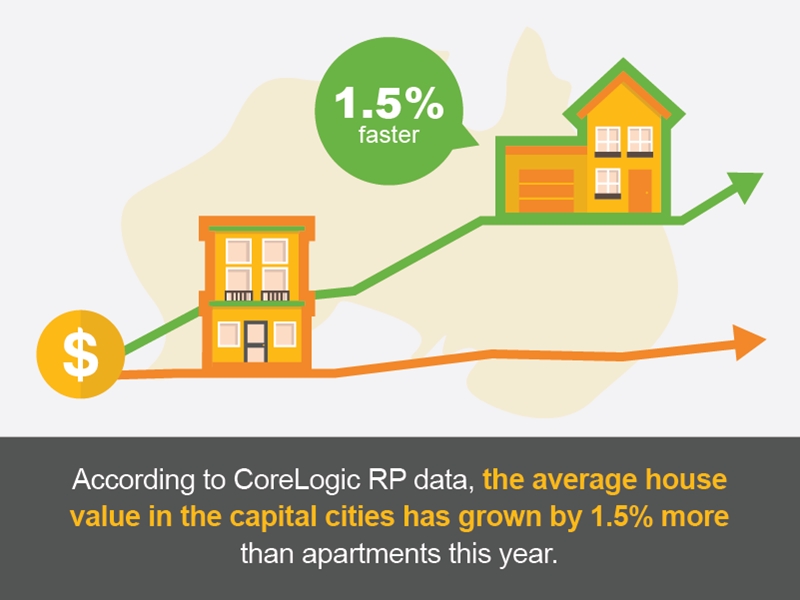
CoreLogic RP data's monthly indices shows the median price of units across our five biggest capital cities is $591,799. That's over $200,000 less than the median price of detached houses, which sits at a lofty $809,910. The gap's even bigger if you're buying in Sydney or Melbourne, where the median apartment price is over $300,000 less than that of houses. As a result, when figuring out how much you can borrow you may find an apartment is the best option for you.

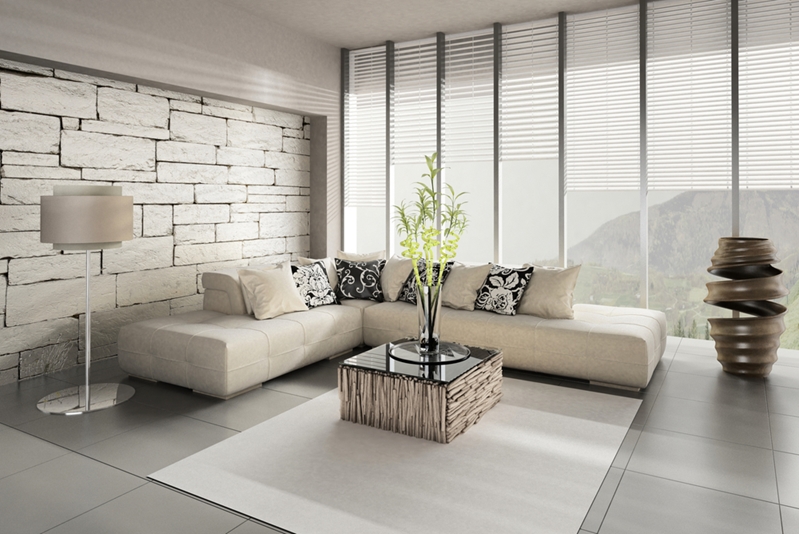
Apartments may be smaller generally, but they can still be comfortable living spaces.Apartments may be smaller generally, but they can still be comfortable living spaces.

While you may be able to pick an apartment up for less, you may also make a smaller profit when you resell. In fact CoreLogic's data states that during the month of August 2016, median price growth across the five biggest capital cities was 0.17 per cent in units and 1.08 per cent in houses.

This reveals a long term trend of detaches houses growing in value more than units or apartments, perhaps due to the waning supply of land in most city centres.

Their smaller size makes apartments a more convenient home for the cleaning or maintenance averse.

Less space, less hassle

A discussion paper by the Department of Environment, Land and Planning has revealed that 43 per cent of apartments in Melbourne have one bedroom, and have floor space of between 41 and 50 square feet.

Apartments elsewhere in Australia may vary in size, but as a general rule they are smaller than houses. This means if you're after a property with more space for a garden, a pet or perhaps for raising a family, then an apartment may not be the right choice for you.

On the plus side, their smaller size makes apartments a more convenient home for the cleaning or maintenance averse. Your strata fees will cover most maintenance, including upkeep of wiring, plumbing and the buildings exterior. All you'll need to worry about is pushing the vacuum cleaner around the 50 square metres or so inside your property, and perhaps doing the dishes every now and then.

Live where you want to live

The median unit price in Sydney is $736,050 and the median house price is $1113,910, according to CoreLogic. The disparity in price is similar in Melbourne. A recent Economist report claims that these cities are amongst the 10 most liveable in the world based on the measurement of a combination of 30 factors.

Buying an apartment could be the key to living where you want to live. Buying an apartment could be the key to living where you want to live.

Understandably a large proportion of first home buyers may want to live near the centre of these cities, to access their many lifestyle benefits and be close to work, family and friends. Due to the outrageous price of detaches houses, apartments will be the best option for most.

If you're puzzling over whether now is the time to get onto the property ladder, get in touch with the team at Mortgageport. We give personalised, hands on advice and will be with you from the first phone call, right through to that glorious moment when you pay off your home loan.

A handy guide to 3 extra costs of buying a home

Spending half a million dollars (or more) on a home and wondering if you've made the right decision is stressful enough. The last thing you need is unexpected costs coming out of the woodwork and making life even more difficult for you. 

But the fact is that first home buyers are often stunned by how much more property costs than the sale price, which can often spell disaster for their finances.

To help make sure you know exactly what you're getting into, we've whipped up a quick run through of three costs that may be unexpected when buying property. 

Lender's mortgage insurance

If you're borrowing more than 80 per cent of your home's value you may have to pay lenders mortgage insurance (LMI), as the bank may identify you as a high risk borrower. This charge comes as a one off fee that your lender will use to insure them in case you default on your loan. 

Before you sign anything, make sure you know what the costs will be.Before you sign anything, make sure you know what the costs will be.

The amount varies from bank to bank, but in general it's a good idea to try to avoid LMI completely, as such a loan may also come with higher interest rates. You can do this by either borrowing less than 80 per cent of the home's value, or by having someone act as a guarantor for your home loan. 

Mortgage fees

Just as your home costs more than its sale price, your mortgage costs more than the interest rate.

Just as your home costs more than its sale price, your mortgage costs more than the interest rate. In fact, there's a myriad of different costs involved, including establishment fees, late payment fees, and even a fee charged when you pay the loan off. 

It's essential that you are aware of all the charges involved, so let an experienced mortgage broker lend a helping hand. We can help make sure that you're aware of every cost, every step of the way. 

Stamp duty

Stamp duty is a hefty fee indeed, one that often surprises and shocks first home buyers. It varies from state to state and scales with the purchase price of your property, so it's always best to check with your mortgage broker or local governing body to be sure you know how much it will be.

Feel free to use Mortgageport's stamp duty calculator in the mean time, which will give you a rough idea of the figure so that it doesn't come as a surprise.

If you need anymore guidance with your home loan, or the home buying process in general, get in touch with the expert team at Mortgageport. 

Are you looking to invest in property? Here’s why you should always have a 100% Offset Account

Many of us will look into buying an investment property knowing that it will provide the ability to obtain a tax deduction for the ongoing interest expense on the money we borrow to purchase the property. The expectation is that the value of the property will increase over a length of time, giving us a nice capital gain and higher rent income in the future is attractive.

In fact, today we get a tax deduction against our income tax at a rate of up to 45% (depending on individual tax rates) for the interest expense and we potentially only pay tax on 50% of any capital gains we make from the property when we choose to sell it in the future.

It is no wonder investing in property has become popular as a sound financial strategy from a taxation perspective.

What are the rules on whether the interest on a loan is tax deductible?

In brief and as specified by the Tax Act, a borrower can claim a tax deduction for interest on an investment property loan because it is an expense (allowable deduction) incurred during the process of earning an Assessable Income.

Your Assessable Income is usually the rental income you receive or expect to receive from a property; it does not include capital gains (covered under the Capital Gains Tax rules). It is important to keep this in mind during the process of researching property investing.

Your purpose will help dictate whether the interest is tax deductible.

Knowing the purpose of your loan will help determine whether the interest on your property loan is tax deductible.

For example, you are able to borrow again your principle place of residence and use these funds to purchase an investment property. The home will act as the security for your loan but the purpose should entitle you to take advantage of tax deductions on the interest of this loan. It’s crucial to keep records of how loan funds are being disbursed as proof for the tax office in the case of an audit.

It’s also important to think about your purpose if you are considering refinancing, as it will be detrimental to you if you accidental change the tax deductible loan purpose.

Why should I have an Offset Account?

Now that you have an understanding of how tax deduction on an investment property works, here’s why every property investor should have an Offset Account:

·         An Offset Account helps you to ensure you do not accidentally alter the loan purpose; and

·         Assists you in keeping clear and separate records as proof to the Tax Office.

For example:

Mary decides to purchase an investment property for $500,000. To do so she offers a mortgage over her owner occupied home worth $750,000. Mary is still eligible to claim a tax deduction on the interest of the loan for her investment property even though it is not mortgaged because the purpose of the loan was to buy an asset that would produce an assessable income.

Later, Mary comes into some money ($200,000) through a family member and decides to use it to bring the original loan down to $300,000 in order to save interest. As a result, Mary is ahead on her mortgage and can re-draw funds as she likes.

A year later, Mary decides to do an extension on her owner-occupied home and re-draws the $200,000 from her loan. The original purpose of the $200,000 for the loan has now changed. Mary now has a $300,000 tax deductible loan and a $20,000 loan which is not tax deductible.

Mary has inevitably diluted her $500,000 tax deductible debt and, as a result, caused herself some accounting strife. In the future, it will be unclear whether she is reducing the original tax deductible loan or non-taxable loan when she makes a repayment against the loan. While she may say that she is paying off the tax deductible loan, the Tax Office may not see it that way. This therefore removes her ability to claim a tax deduction on the $200,000.

How can this be avoided?

Mary could have avoided these issues by attaching an Offset Account to her investment loan. This is a completely separate account linked to the loan account that reduces the gross amount of the loan account to give a net balance each month. The bank uses that balance to calculate interest. Therefore, the account acts the same way as a savings account does. Mary could have parked the $200,000 here for as long as she wanted without reducing or altering the original purpose when she made repayments again this amount.

This would mean that Mary would have the same amount of interest on the loan but also preserve the maximum tax deductibility into the future.

Mary’s example shows just how important it is to seek advice about your home loan and financial goals so that you can enjoy the greatest benefits on your investment. It’s not just interest rates that are important; loan structure, service and advice is critical ensuring you receive the best results when combined with competitive rates.

MyChoice Home Loans will take the time to really understand your circumstances and tailor a loan to suit your unique needs.

Read more about our construction loans for investors or contact us today for more information.

Contact us to discuss your unique circumstances today by phoning (02) 8848 6000 or emailing mychoicehomeloans@mcdonaldjones.com.au

How to build your first home with help from your family

Parents and family members are playing a more and more active role in helping younger family members to purchase their first home.

There are a number of ways that parents or relatives in a good financial position can help you to take your first step onto the property market.

Lending money

Many families who have already paid off their mortgage or are in a strong financial position are lending money to loved ones either for the deposit or acting as the ‘bank’ for the overall mortgage of their first home. This is a great way for your parents or family member to give you a helping hand with your home loan if they feel that you will be reliable and able to make your payments.

It’s important that a legal agreement is made between you and the lending family member and that interest is charged on your loan so that it isn’t simply classified as a gift.

Acting as guarantor

If you are still on the path to saving for a deposit on your new home but already earn enough to make the home loan repayments, a family member acting as a guarantor can help you to secure your home loan earlier than you thought possible. Many lenders offer a parental guarantee or family pledge home loan feature that allows them to access the equity in their own property and use this as security over a portion or total cost of your home loan.

This solution could allow you to borrow more for your new home, significantly reduce your loan to value ratio and will save you money by reducing or allowing you to completely avoid paying Lender’s Mortgage Insurance.

Gifting money

If a loved one is in the financial position to do so, a monetary gift could help set you on the path to a deposit for your new home.

Living at home longer or staying in an affordable investment property

Another common way that your parents can help you to build for your first home is by allowing you to live at home longer, giving you more time and income freedom to save for a deposit. Alternatively, if your parents have an investment property, they could allow you to live in one of their investment properties for free or at a reduced rate.

There are a number of ways that your family can help you to build your first home; however, the most important thing is that both parties make an informed decision about this arrangement.

Our home loan experts are available to sit down with your parents, family member and yourself to go over your options and advise the best solution. We can then guide you through the process of making the arrangements and find you the best home loan to suit your unique needs.

Contact us to discuss your unique circumstances today by phoning (02) 8848 6000 or emailing mychoicehomeloans@mcdonaldjones.com.au

Enquire

Please fill in your details below and a MyChoice representative will be contact.